Backyard security in Georgia starts at the perimeter - not the camera on the porch. If someone can drive onto the lot, walk a soft fence line, or cut through an open side yard, the house alarm is late. Custom gates, fencing, and access control work together as one edge: a clear entrance, a continuous fence, and a way to decide who opens the gate.
What the perimeter actually has to do
On a North Georgia lot, the perimeter has three jobs. First, it marks private ground so casual traffic does not treat your driveway like a cut-through. Second, it slows someone who is fishing for an open garage, an unlocked shed, or a quiet pool gate. Third, it frames the house so the first impression matches the rest of the property instead of reading as a temporary barrier.
That is shop work: steel in the opening, posts in clay that will heave, and a finish that holds through UV and humidity. Cameras and lighting help, but they do not close a gap in the fence or stop a car at the street.
Start at the gate, then close the fence
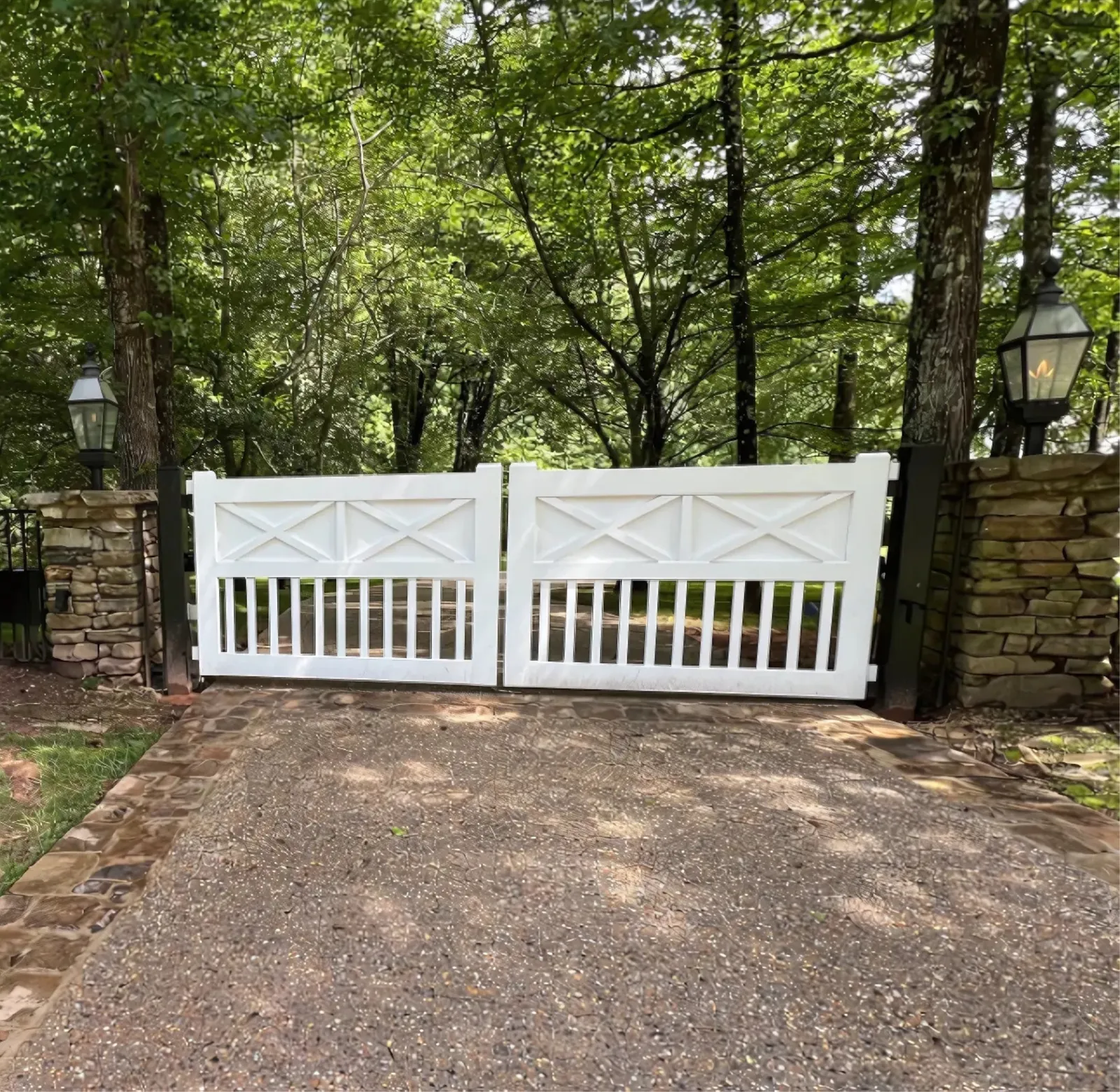
Most unwanted traffic still comes through the front. A lock on the house does nothing if anyone can park in the circle and walk the building. A fabricated driveway gate puts a physical stop at the entrance. Pair it with a keypad, remote, telephone entry, or credential reader so residents are not climbing out in the rain to open a latch.
We cover why that entrance decision matters in security starts at the gate. The short version: automatic hardware is only as good as the gate weight, the operator, the photo eyes, and the power path. Spec those as one system.
Once the opening is controlled, walk the rest of the line. Soft spots we see on Georgia sites include unfinished side yards between neighbors, pool enclosures that stop short of the house, and decorative front fencing that never connects to a real rear fence. Close those gaps with the same height language and post schedule so the lot reads as intentional.
Georgia realities: theft, privacy, and how lots are used
Homeowners here ask about package porches, ATVs and mowers in open sheds, and backyard privacy when new construction goes up behind them. Those are ordinary pressures - not abstract “security theater.” A denser rear fence or taller privacy panels can cut sight lines from a neighboring deck. Ornamental steel on the street side keeps curb appeal and still defines the front. Pool yards need self-closing gates and spacing that meet code; that is a different job from driveway access, but it is still perimeter work.
If you are weighing whether a gate belongs in the budget for resale or daily use, read does a gate increase property value. Buyers notice a finished entrance. They also notice a gate that binds, an unfinished fence stub, or an operator that fails after every storm.
Access control without turning the house into a campus
Residential access control should feel simple: open for the people who live there, hold for everyone else, and log or announce guests when you want that. Telephone entry and keypads at the pedestal keep deliveries at the street. Credential systems help when you have cleaners, landscapers, or multiple households on one drive. Commercial sites add time zones and reporting; homes usually need fewer features and cleaner hardware placement.
Put the pedestal where a driver can reach it without blocking the sidewalk or sitting in the travel lane. Plan conduit before the concrete. We build that stack under access control alongside the gate, not as a weekend add-on.
Materials and climate that match the edge
Georgia heat, humidity, red clay, and lightning are part of the spec. Powder-coated steel, sealed connections, proper footings, and surge protection on powered gates are baseline - not upgrades. Wood privacy sections need drainage and a maintenance plan. Chain link has a place on utility edges; ornamental steel carries the public face. Match the material to the job on each elevation instead of forcing one product around the whole lot.
For climate and material tradeoffs across the region, see choosing the right fence for Georgia’s climate. For automatic gate weather issues, Cumming weather and electric gates covers operators and storm planning.
How we walk a perimeter on site
On a typical residential visit we start at the street, not the backyard. We note driveway width, slope, sidewalk conflict, and where a pedestal can sit without blocking the travel lane. Then we walk both side yards for soft spots - open neighbor edges, unfinished returns to the house, and grade drops that leave a gap under the bottom rail. The pool area gets its own check for gate swing, latch height, and whether the barrier is continuous.
Only after that route is clear do we talk style. A handsome ornamental front that never meets a finished rear fence is still an incomplete perimeter. The same is true of a tall privacy wall with an open driveway: you spent money on screening and left the easiest path in.
Gates, operators, and what fails first in Georgia
When a powered gate is part of the plan, the failure points we see most are undersized operators, missing or misaligned photo eyes, no surge path, and battery backups that were never specified. Georgia storms and heat make those omissions obvious. Build the entrance as steel plus controls plus power protection, then keep the fence continuous to the house corners.
If the gate already exists and only needs service, that is sister-brand work at The Gate Doctor. New fabrication and access packages stay with Georgia Gate & Fence through Start Your Project.
Putting the pieces on one proposal
Ask for one scope that names the gate type, fence elevations, access hardware, and finish. Split bids - one company for fence, another for the operator, a third for the pedestal - are how homeowners end up with a beautiful leaf that does not talk to the keypad. We fabricate and install as one shop so the opening, the line, and the credentials match the drawings.
Residential vs commercial edges
Homes need a clean entrance, privacy where the living spaces face neighbors, and pool compliance where water is present. Commercial and community sites add vehicle queues, barrier arms, pedestrian gates, and credential reporting. The fabrication mindset is the same: measure the opening, design for traffic, and install hardware that crews can service. Browse our cities pages if you want local context for how we work across Atlanta and North Georgia.
Frequently asked questions
No. Fence lines slow opportunistic access and define the property, but the driveway opening is still the weak point unless you add a gate and a way to control who opens it.
Often yes on the rear and sides. Solid or denser panels help privacy; ornamental steel on the front keeps sight lines for the street. Match height and style to the lot, not a single catalog look.
At the primary vehicle entrance. Keypads, remotes, and telephone entry belong with the gate operator so guests and deliveries use one monitored opening instead of walking the fence line.