A well-designed entrance feature can significantly influence how a property is perceived from the outside. Beyond aesthetics, it can contribute to improved security, privacy, and overall curb appeal. Many homeowners consider adding this feature as part of broader exterior upgrades that enhance both functionality and visual impact. Its presence can also create a stronger first impression for visitors and potential buyers. This guide covers how installing a gate can affect property value and what factors homeowners should consider before making this investment.
Why Homeowners Ask if Gates Increase Value
Since 2020, many homeowners have placed property security and aesthetic upgrades at the top of their priority lists. Rising concerns about break-ins, combined with a desire to boost a home’s curb appeal before selling, have led countless property owners to ask a straightforward question: Does installing a gate actually make financial sense?
When we talk about gates in this context, we’re referring to driveway gates, estate entrance gates, and key perimeter access gates at residential properties, commercial sites, or small multifamily buildings. These aren’t garden gates or decorative fencing elements—they’re substantial installations designed to control access, enhance security, and create a strong first impression.
The central question is whether adding a gate actually shows up in the resale price or appraisal, or if it’s simply a “nice to have” feature that doesn’t move the needle financially. This article covers the real value impact, realistic ROI ranges, when gates help versus hurt, and practical factors like materials, design, maintenance requirements, and costs. Whether you’re considering a $600,000 home in the US, understanding these factors helps you make a smart decision.
Does a Gate Really Increase Property Value?
In most mid-to-high-value neighbourhoods, a well-chosen gate at your driveway or main entrance can increase property value by roughly 3–10%, depending on location and gate quality. This isn’t speculation—research from the American Real Estate Society (ARES) quantifies a nearly $30,000 average premium for homes with gated access compared to non-gated equivalents.
Value from gates is partly “hard”—what buyers will actually pay more for at closing—and partly “soft”:
- Faster sale times (some gated properties sell 50% faster than comparable properties)
- More offers from interested buyers
- Reduced need for other exterior upgrades to achieve market-ready presentation
- Stronger negotiating position during viewings
In certain markets, including gated communities, high-crime postcodes, and luxury suburbs, appraisers and prospective buyers routinely assign a premium to secure, automated gates installed within the last 10 years. A hedonic analysis of Cumming sales found that gated streets commanded a 26% premium over public unrestricted streets, with approximately 9% attributable directly to the gating mechanism itself.
However, value uplift is not guaranteed. Poor professional installation, mismatched style relative to the property’s worth, or visibly cheap high-quality materials can negate or even reverse the benefit. Buyers may mentally deduct replacement costs from their offer if a gate looks neglected or out of place.
How Gates Add Value: Security, Privacy, and Curb Appeal
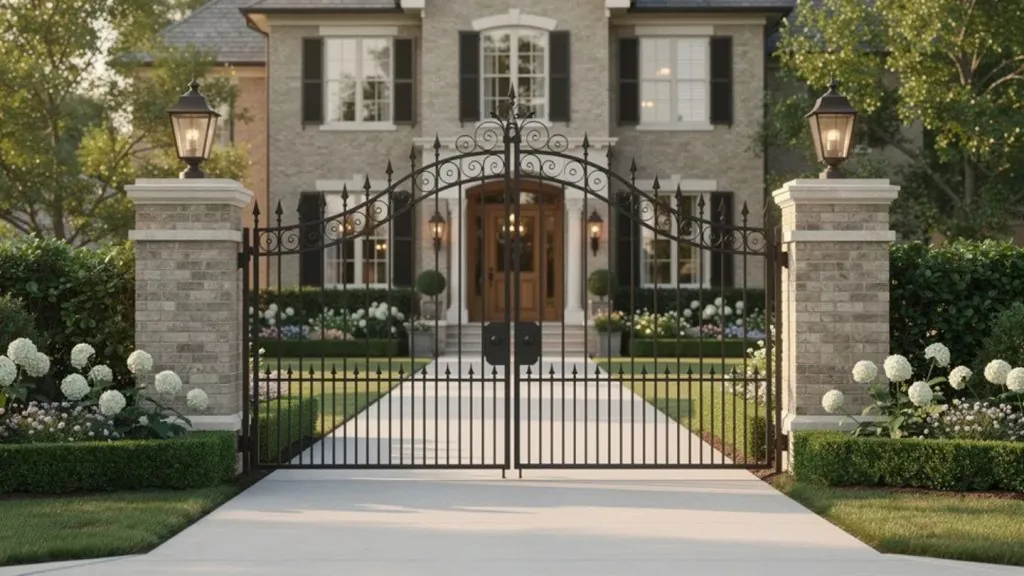
The gate’s value impact stems from three core benefits: security, privacy, and visual appeal, plus a psychological “prestige” effect that influences how potential buyers perceive the entire property.
Security Benefits:
- Security gates deter opportunistic crime by creating a physical barrier that intruders must overcome
- Gates can integrate with modern systems, including security cameras, video intercoms, and alarms
- Justice Quarterly research shows gated properties experience lower burglary odds even after controlling for income and geography
- Motion sensors and surveillance cameras add layers of protection at entry points
- Controlled access means you decide who enters your property
Privacy Advantages:
Privacy gates—especially solid or semi-solid designs—reduce street visibility, which is particularly prized on busy streets or in dense urban areas. Homeowners gain protection from prying eyes without sacrificing outdoor spaces. For families with children or pets, enclosed driveways and front gardens become a safe haven rather than a potential escape route.
Enhancing Curb Appeal:
A property’s curb appeal can transform dramatically with the right gate:
| Property Style | Gate Match | Impact |
| Victorian terrace (c. 1890–1910) | Ornate wrought iron | Classic elegance |
| Contemporary 2020s build | Timber-clad sliding gate | Clean, modern appeal |
| 1990s suburban home | Powder-coated aluminium | Fresh, updated look |
First impressions at a viewing—pulling up to a smart, well-lit automatic gate—often set buyer expectations before they even step inside. This initial moment can justify higher offers without changing a single interior feature.
Types of Gates and Their Impact on ROI
Not all gates add equal value. Style, material, and operation type (manual gates versus automatic) heavily influence your return on investment.
Gate Operation Styles
| Type | Best For | Space Requirements | Typical ROI Impact |
| Swing gates | Traditional entrances | Requires a clearance arc | Strong for classic properties |
| Sliding gates | Short or sloped driveways | Needs lateral space | Excellent for modern homes |
| Cantilever gates | Uneven ground, wider driveways | No ground track needed | Premium perception |
Material Choices
- Wrought iron delivers a classic, high-end aesthetic value that suits period properties and commands attention. These metal gates signal quality and permanence.
- Steel provides maximum overall security with strength that deters intrusion, though it requires powder-coating to prevent rust and demands more maintenance.
- Aluminium offers lightweight construction with low maintenance requirements—ideal for automated systems where motor strain matters. Modern automatic gates often use aluminium for this reason.
- Composite or hardwood creates a warmer overall aesthetic appeal but requires regular upkeep, including sealing and potential refinishing every few years.
Automation Features
Automated electric gates with remote control, keypads, and smartphone apps installed after approximately 2018 are especially attractive to tech-savvy buyers. Gate systems featuring these advanced features signal a property that’s been updated for modern living:
- Video intercoms for visitor screening
- License plate recognition for seamless entry
- Geofenced opening via smartphone integration
- Solar-powered gate systems for energy efficiency
Smart integrations appeal strongly at higher price points, though they may be overkill on entry-level properties where buyers prioritize basic functionality over advanced security features.
The “best” gate type is ultimately the one that suits your specific property’s layout and price bracket—not simply the most expensive option available.
Key Factors That Determine Whether a Gate Adds or Reduces Value
Buyers and surveyors look at execution, not just the presence of a gate. Several factors determine whether your investment pays off:
Design Compatibility:
- The gate should match the home’s architecture seamlessly
- Modern aluminium slats suit 2022 new-builds
- Ornate ironwork complements 1930s Tudor-style houses
- Mismatched styles create visual discord that turns off potential buyers
Quality of Workmanship:
- Solid foundations prevent shifting and sagging
- Smooth operation without grinding or sticking
- Correct automation with proper safety features
- Concealed cable runs and neat finishing
- Safe clearances meeting current standards
- Visible DIY errors undermine perceived value significantly
Local Norms: In some 2024 suburban areas, gated driveways are standard above a certain price point—the absence of a gate actually hurts value. In other neighbourhoods, gates may feel out of place or suggest the owner is unfriendly. Research comparable properties in your area before committing.
Maintenance Condition: Gates that are rusted, peeling, noisy, or have frequently failing motors signal neglect. Buyers may reduce offers compared with similar ungated properties, effectively punishing you for installing something that became a liability.
Practical Considerations:
- Turning radius for larger vehicles
- Emergency access for fire services
- Compliance with local planning rules
- Delivery driver accessibility
Any friction in these areas becomes a negative factor in the buyer’s eyes.
How to Choose the Right Gate to Maximize Property Value
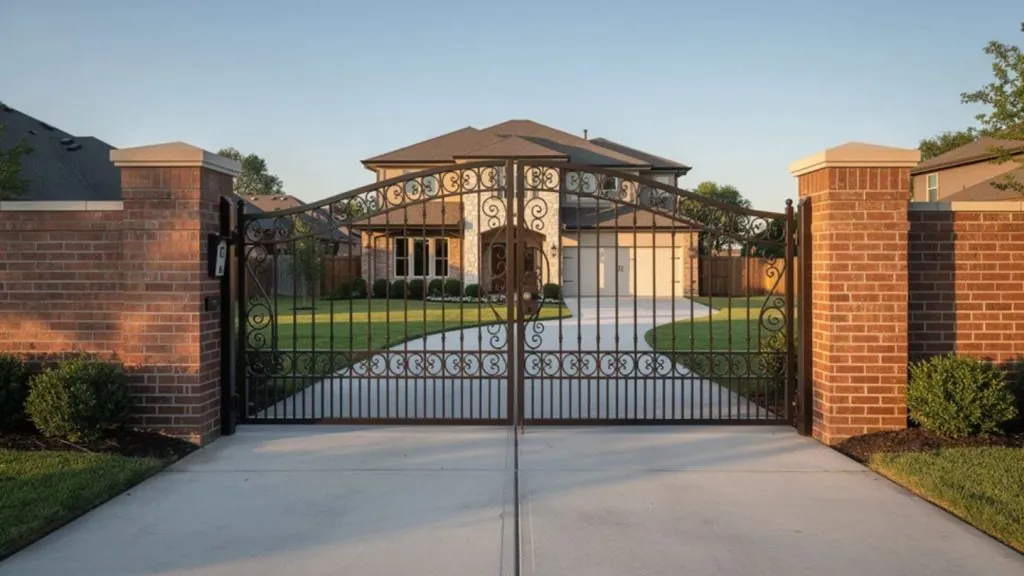
Treat your gate as part of an overall exterior design strategy, not an isolated purchase. The right gate selection process starts with an honest assessment.
Assess Your Property
Consider these factors before choosing:
- Age and style: Period properties need sympathetic designs; modern homes suit clean lines
- Neighbourhood expectations: What do comparable properties feature?
- Security concerns: Local crime rates and specific vulnerabilities
- Future sale timeline: Selling within 3–7 years versus long-term hold affects ROI calculations
- Budget reality: Don’t overspend relative to your property’s market value
Design Principles
Choose gate height, material, and level of privacy that balances improved security and aesthetic appeal. Semi-open designs often work best on front-facing suburban homes where some visibility is desirable—completely solid gates can feel fortress-like and unwelcoming.
Coordinate your gate with:
- Existing fencing materials and style
- Driveway surface (concrete, resin, pavers, gravel)
- Front lighting to create a unified look at night
- Landscaping elements that frame the entrance
Specify Reliable Automation
For automatic driveway gates, prioritize:
- Reputable motor brands with track records
- Battery backup for power outages
- Safety edges and photocells meeting current standards
- Remote control options, including modern app connectivity
Documentation Matters
Get written warranties, service options, and clear maintenance guidance from your installer. These documents support long-term value retention and reassure future buyers during their due diligence.
Enhancing Property Appeal and Long-Term Value
Adding a well-designed gate can improve both the appearance and functionality of a property. Besides enhancing curb appeal, gates provide increased privacy, security, and controlled access. When chosen to match the home’s style and neighborhood expectations, they can contribute positively to resale value and overall property attractiveness.
Georgia Gate & Fence offers reliable solutions as a trusted gate supplier for contractors in Cumming, helping property owners and builders enhance security and visual appeal. We provide durable commercial gates and residential gates designed for long-lasting performance and style. Contact us today to discuss your gate needs and explore quality options for your property.
Frequently asked questions
A well-designed driveway gate can increase property value by about 3–10%, particularly in mid-range or upscale neighborhoods. The impact depends on local buyer expectations, security needs, and whether similar homes in the area also feature gated entrances.
Automatic gates generally appeal more to buyers because they provide convenience, security, and modern functionality. While manual gates may suit lower-priced homes, automated systems typically enhance resale appeal and perceived property value in mid- to high-end markets.
Some insurers may offer small premium discounts for properties with secure gates, especially when combined with alarm systems or CCTV. However, the savings are usually modest, and the primary benefit is improved security and reduced risk of unauthorized access.
In many areas, gates below certain height limits may not require permits, but regulations vary. Homes in conservation areas, with shared driveways, or near public roads may need approval, so checking with the local planning authority is recommended before installation.
Installing a gate may not provide strong financial returns in lower-priced neighborhoods where gated driveways are uncommon. In such cases, essential upgrades like roof repairs, structural fixes, or interior improvements may offer better value and stronger appeal to buyers.