Style is the easy part of choosing a fence. A catalog photo can tell you what a line looks like on a perfect lot. It cannot tell you how that line will sit under Georgia trees, next to a pool, against a stone wall, or down a slope. The property’s environment — moisture, existing structures, terrain, and the trees already in the way — is what decides which fence material and finish will actually perform and look like they belong.
This is not a recap of steel versus aluminum. If you want that comparison, use our Material Selection guide. This article walks the site first: the real conditions to weigh before you lock a fence material for a Georgia property.
Trees and Root Lines
Trees near the fence line change more than the view — they change where posts can actually go. As a rule of thumb, posts should stay outside a tree's drip line (the edge of its canopy) whenever possible, since major roots typically concentrate there. When a root does sit right where a post needs to go, shifting the post 12–18 inches usually solves it — cutting through roots thicker than about 2 inches can destabilize a mature tree, which is a bigger problem than a slightly adjusted post line. For large or particularly valuable trees, it's worth having an arborist take a look before digging.
Pools and Moisture
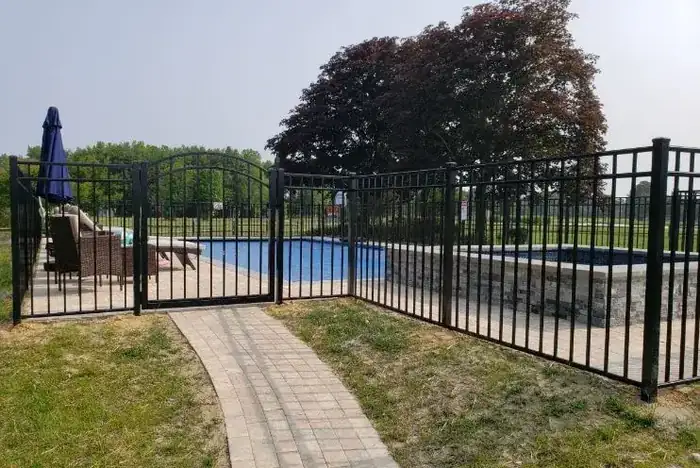
On a humid Georgia lot, and especially beside a pool, the finish on the steel matters as much as the material itself. Two fences can leave the shop looking identical and age completely differently depending on what is protecting the metal underneath.
That is why we point pool and moisture-heavy work to a duplex system: galvanize first, powder coat on top. As we explain in the Finish Guide, zinc handles long-term corrosion; the powder coat is the color you actually see — and it shields the zinc from everyday wear. If the top coat chips, zinc is still working. A powder coat alone looks identical to duplex on install day. The difference shows up years later — after the first ding from a mower or a driveway nick. Duplex is what we build with on most ornamental projects.
Pool enclosures add code, height, and gate hardware on top of that finish choice. For the enclosure itself, see our pool fencing work — custom steel, with finishes and profiles selected to match the property.
Stone Walls and Architectural Style
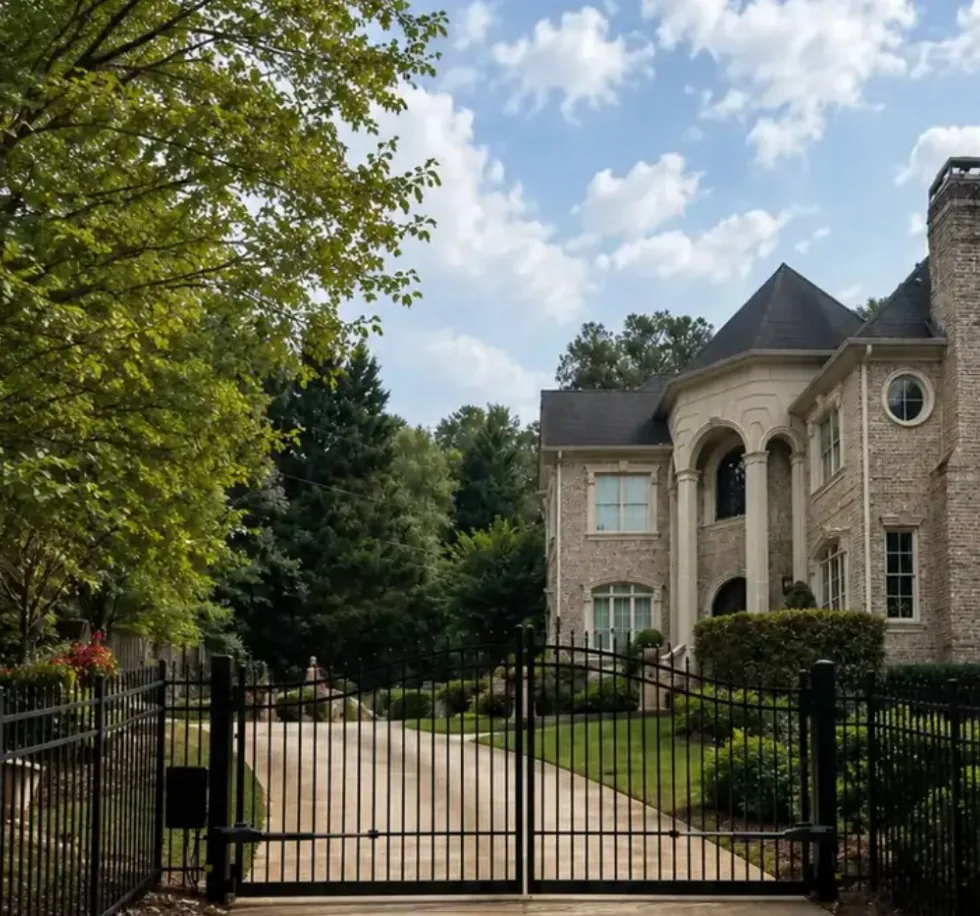
If the house already has stone, brick, or masonry columns, the fence should read as part of that architecture, not as a leftover panel from a different job. The material can still be steel. The silhouette is what has to agree with the wall and the house.
The Georgian is our clean-lined, modern ornamental steel line — a restrained profile for contemporary homes and estates that want presence without extra ornament. The Athens is the timeless, elegant counterpart: a classic picket-and-finial line that sits more naturally on traditional estates and distinguished residences, including runs that meet stone columns.
Both are fabricated in-house in Cumming. The question is which one the existing masonry and the house already asked for — not which photo looked busier in a catalog.
Terrain and Slope
Slope, drainage, and grade change how a fence is planned and set. Uneven runs usually need panels that follow the ground instead of fighting it, and a steep cut is not the place to lock a style before anyone walks the line.
For a full breakdown of property-line, permit, and terrain factors to plan around, see our Design Considerations guide.
Final Thoughts
Choosing fence material for a Georgia property starts on the dirt: trees, moisture, the house you already have, and the grade you cannot change. Style comes after those answers, which is how you avoid a catalog line that looks right in a photo and wrong on the lot.
When you are ready to compare steel, aluminum, and true wrought iron — and why we fabricate American-made steel — use the interactive Material Selection guide. Then tell us about the trees, the pool, the stone, and how the yard actually sits. At Georgia Gate and Fence we design, fabricate, and install from our shop in Cumming for homes and properties across Metro Atlanta and North Georgia. Start your project or call (770) 664-1121.