When Cumming homeowners ask for “wrought iron,” they usually want the look: vertical pickets, clean rails, optional rings or scrolls, and a dark finish that belongs on a North Georgia facade. What we fabricate for that look today is almost always ornamental steel - not hand-forged wrought iron. Knowing the difference keeps expectations honest and the fence durable.
Ornamental steel vs true wrought iron
Historic wrought iron is worked solid iron with a fibrous structure. It is rare and expensive for full residential runs. Modern ornamental fencing uses steel tube rails and pickets, welded into panels, then powder coated. From the street it reads as classic ironwork. In the shop it behaves like steel: predictable cuts, consistent welds, and a finish system we can warranty.
If a salesperson promises “real wrought iron” at commodity pricing, ask what alloy is in the ticket and how the finish is applied. Our ornamental fencing page is the honest product family for that look.
Why the look still fits Cumming and Forsyth lots
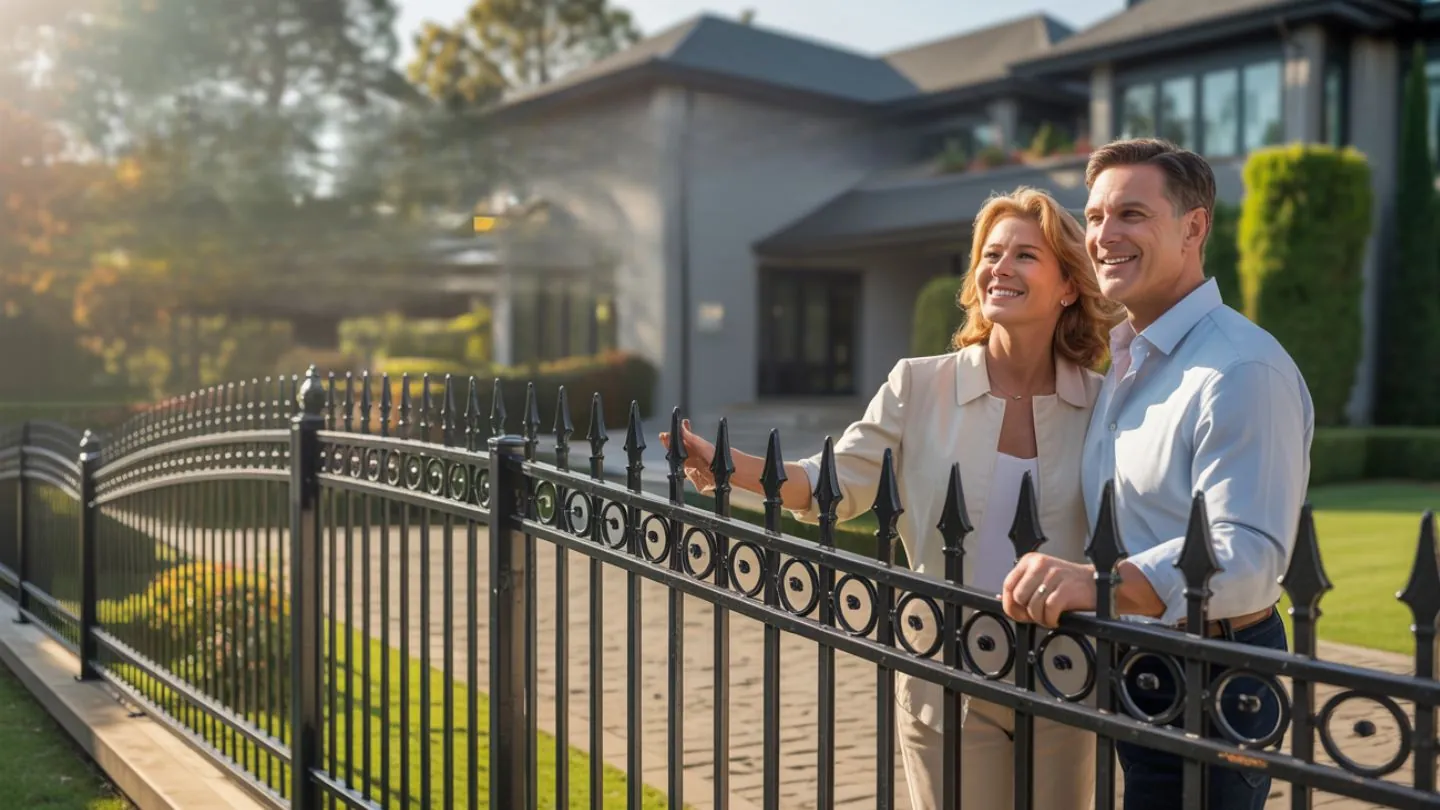
Ornamental steel defines the front without boxing the house in. Drivers and guests see the architecture; the fence still marks private ground. On busy roads it discourages casual cut-throughs. On estate drives it pairs cleanly with a custom gate. Side and rear elevations can shift to denser privacy panels where neighbors sit close - same shop, different panel schedule.
Signature lines such as The Georgian and The Athens give HOAs and homeowners a known silhouette instead of a one-off that never matches the next phase of the subdivision.
Durability in Georgia weather
Humidity, UV, and clay-driven movement are normal here. Powder-coated steel handles that cycle better than bare metal or thin paint. Welds need cleaning before coat; posts need depth for clay heave; bottom rails need clearance so soil and mulch do not hold moisture against the finish. For climate tradeoffs across materials, read the Southern standard fence guide.
Finish selection and touch-up discipline matter as much as picket style. Start with the finish guide before you fall in love with a sample chip under showroom lights.
Security and privacy without stuffing keywords
Ornamental steel is not a vault. It is a defined edge that slows opportunistic access and supports a gate at the driveway. Privacy comes from panel density, height, and where you place solid sections - not from calling every product “maximum security.” Pool enclosures are a separate code conversation; ornamental runs on the street rarely double as pool barrier without checking spacing and gate hardware.
Curb appeal and value - without fake stats
A straight, well-finished ornamental fence photographs well and tells buyers the exterior was maintained. That can support offers. What it does not do is guarantee a fixed percentage bump you saw in a national blog post. Local comps, condition of the house, and neighborhood norms matter more. If someone quotes a precise home-value lift for fencing alone, ask for the source.
Matching existing lines and replacements
Partial replacements fail when picket spacing, rail heights, rings, and post caps do not match. That is fabrication and detailing work, not a catalog swap. We walk that process in how we match ornamental fence detailing. For projects in town, see Cumming, GA.
Frequently asked questions
Almost never. Most new ornamental fence is steel tube and pickets with a powder-coat finish that reads as classic wrought iron from the street.
Steel holds straight lines, takes a durable finish, and keeps sight lines for the street while still defining the lot. Wood privacy belongs where you need solid screening.
A finished, well-installed fence can help curb appeal and buyer confidence. Treat any specific percentage claims online as marketing unless you have a local appraisal behind them.