An automatic gate system combines structural components, motors, control electronics, safety sensors, and access devices to deliver secure, coordinated entry at the touch of a button. Once limited to commercial sites, these systems are now common in homes and small businesses thanks to improved reliability and affordability. From swing and sliding gates to boom barriers, each setup applies the same core principles. This guide covers how how automatic driveway gates work, including components, movement types, safety features, and power options.
How Automatic Gates Work: The Basic Sequence
The basic open/close cycle follows a consistent sequence across most automatic gates.
- A user sends a signal via remote control, keypad PIN, smartphone app, or vehicle detection loop.
- The control board receives the signal and checks all connected safety sensors.
- If the path is clear, the motor engages and moves the gate.
- Once fully open, the system waits for a programmed hold time.
- Sensors are checked again before closing.
Limit switches or encoder feedback tell the controller when the gate reaches full open or closed positions. Modern systems use soft-start and soft-stop functions, gradually accelerating and decelerating movement to reduce mechanical stress and pinch risks.
Most operators installed since 2015 support multiple triggering methods simultaneously. Households may combine remotes for daily use, keypad access for guests, and smartphone apps for remote monitoring. Timer-based programming can also allow scheduled openings.
Main Components of an Automatic Gate System
Automatic gates operate through a coordinated control sequence. When a signal is sent via remote, keypad, app, or loop detector, the control board verifies safety sensors before activating the motor. The system manages opening, hold time, and closing automatically, using limit feedback and soft-start/stop functions for smooth, safe operation.
Gate Structure (The Physical Barrier)
The gate structure is the physical panel that secures the opening. Swing gates use one or two hinged leaves that pivot open and closed, while sliding gates move horizontally on rollers along the fence line. Common materials include steel, aluminum, timber, and composite, each offering different strengths, weights, and maintenance requirements.
Residential gates typically span up to 4–5 meters per leaf for swing designs, while sliding gates can cover wider openings if sufficient run-back space is available. Gate weight and width directly influence motor selection, especially with solid infill panels that increase wind resistance. Proper hinge strength, track alignment, and structural support are essential, as resistance or misalignment can overload the motor and reduce system lifespan.
Gate Operator and Motor (The Muscle)
The gate operator is the mechanism that powers movement, housing the motor, gearbox, drive system, and protective casing. It may be mounted on posts, concrete pads, or concealed underground, depending on design preferences. Most residential systems use 24V DC electromechanical motors, valued for quiet operation, energy efficiency, and compatibility with battery backup or solar setups.
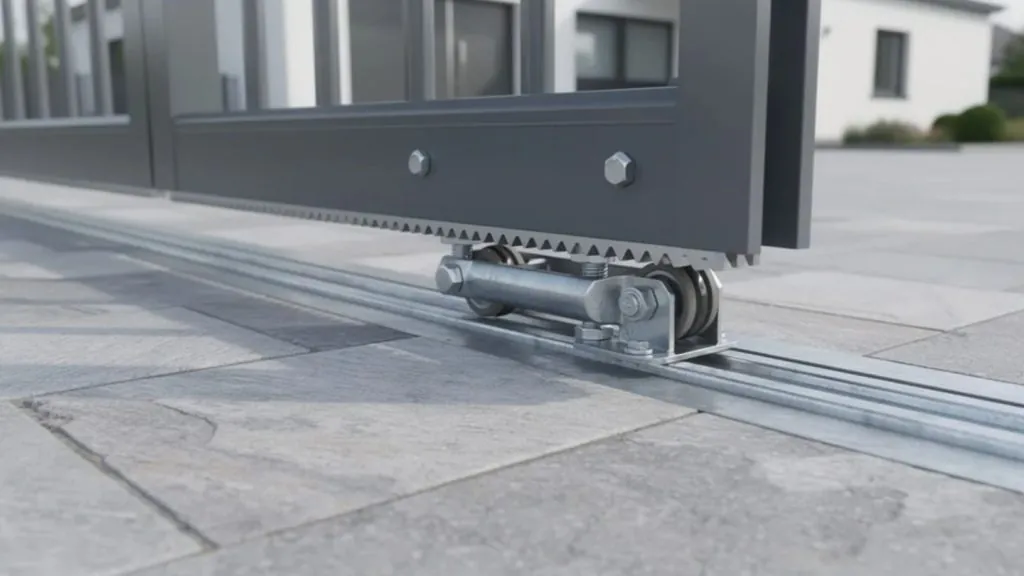
Heavy-duty commercial gates may require hydraulic operators or 230/240V AC motors for increased lifting power. Swing gates move via linear rams or articulated arms attached between the post and gate leaf, while sliding gates use a motor-driven gear engaging a toothed rack along the gate’s base. Operator selection depends on gate weight, daily usage frequency, and environmental conditions such as wind exposure.
Control Panel and Logic Board (The Brain)
The control panel is the system’s central command unit, housed in a weatherproof enclosure near the gate. It receives signals from remotes and access devices, activates the motor, monitors safety sensors, and manages operational logic. Modern controllers offer programmable features such as pedestrian mode, adjustable auto-close timing, soft-start and soft-stop motion, and time-based access scheduling.
All accessories, including photocells, keypads, intercoms, and loop detectors, connect directly to the board, simplifying upgrades and troubleshooting. Many systems now support Wi-Fi or GSM modules for smartphone control and activity logs. Programming should be handled by qualified technicians to ensure safety and reliable performance.
Access Control Devices (How You Tell the Gate to Move)
Access control systems allow authorised users to enter while restricting unwanted access. Common devices include RF remotes, PIN keypads, RFID fobs, intercoms, and smartphone apps using Wi-Fi or GSM connectivity. Many residential setups combine remotes for everyday use with a keypad for guests or tradespeople. Modern app integration enables remote operation, status monitoring, and activity notifications.
Each device connects to the control board differently, allowing for flexible configuration. Layered access can include time-restricted codes, one-time entry credentials, and permanent permissions for residents. Lost remotes can be removed, compromised codes deleted, and access logs reviewed to maintain ongoing security control.
Safety Sensors and Protection Devices
Safety sensors are mandatory elements that stop or reverse the gate if a person, vehicle, pet, or obstacle is in the closing path. These components are essential for protecting family members, visitors, and property from injury or damage.
Typical sensors include infrared photocell beams mounted on opposing posts across the gate opening, pressure-sensitive safety edges attached to the leading edge of sliding gates, and ground loops that detect when a vehicle is sitting in the opening. Some commercial installations add radar sensors or additional beam sets at different heights.
When something breaks the photocell beam during closing, whether a car bumper, a child’s bicycle, or a delivery cart, the control panel immediately stops and reverses the motor. Similarly, if a safety edge contacts an obstacle (like a bin left in the path), internal switches compress and trigger immediate reversal. Ground loops hold the gate open as long as a vehicle’s metal mass is detected over them, preventing the gate from closing on a car’s trunk or tow bar.
Post-2010 safety standards in many regions require multiple redundant safety measures, especially for gates near public footpaths, shared driveways, or areas where children play. A properly designed system should have at least two independent methods of obstacle detection.
Power Supply, Batteries, and Solar Options
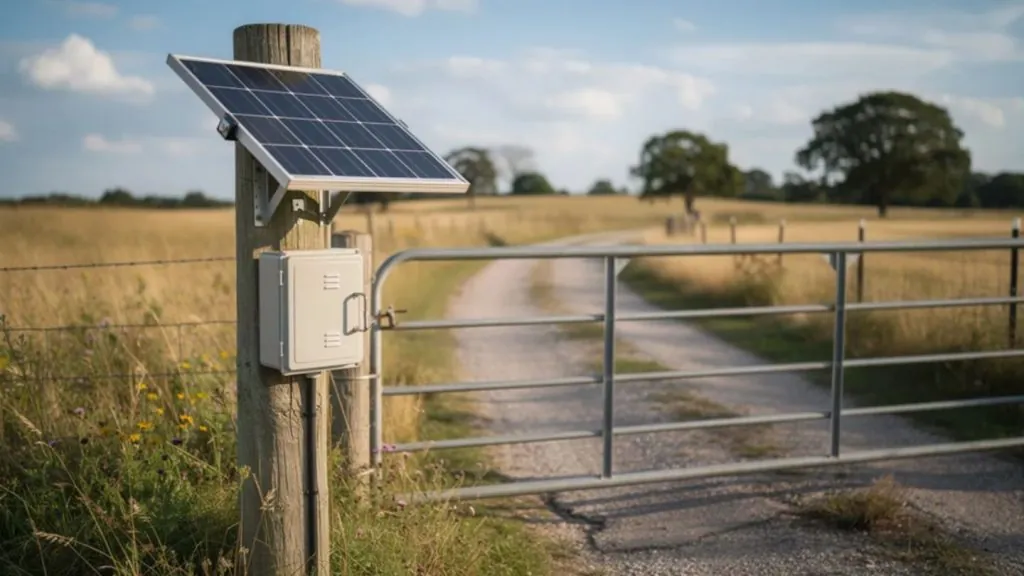
Most automatic gates connect to mains power, typically 230/240V AC, run from the main building through an underground conduit to the gate location. Inside the control box, a transformer steps this down to the low voltage (usually 12V or 24V DC) that powers the motor and electronics.
Many modern operators include battery backup systems as standard or optional equipment. These 24V battery packs take over automatically during power outages, providing several dozen open/close cycles, enough to maintain normal access for a day or two until power returns. This prevents households from being trapped inside or locked out during storms or grid maintenance.
Solar configurations have gained significant popularity since roughly 2010, especially for rural driveways without convenient power cable routes. A typical setup includes a 50–100W photovoltaic panel, a charge controller, and two deep-cycle batteries. In sunny climates, this arrangement easily handles 20–30 cycles per day with capacity to spare. Solar-powered systems offer an eco-friendly, off-grid solution that eliminates ongoing electricity costs.
Trade-offs exist between power source options. Solar systems need unobstructed sun exposure and work best for moderate daily usage; heavily trafficked commercial gates typically require mains power with substantial battery backup. Shaded or heavily treed driveways may not generate sufficient solar charge, and panels require occasional cleaning if covered by dust or debris.
Manual Release and Emergency Overrides
Every compliant automatic gate since the mid-2000s includes a manual release system allowing users to disconnect the motor and move the gate by hand during faults or prolonged power outages. This critical feature ensures you’re never completely locked in or out.
Typical mechanisms include a lockable key release on swing gate arms, a release lever on sliding gate motors, or a special triangular or barrel key that disengages underground operators. Once released, the gate moves freely on its hinges or rollers until power returns and the system is re-engaged.
Knowing where your release mechanism is located and testing it annually ensures you’re prepared for emergencies. Keep the release key in an accessible but secure location, ideally inside the house rather than at the gate, where it might be lost or accessed by unauthorized persons. A storm-related blackout at night is not the time to be searching for instructions or trying to figure out how to disengage an unfamiliar mechanism.
For multi-user premises like apartment buildings or commercial properties, building management or security personnel should keep clear instructions posted near the control box for emergency personnel access.
Types of Automatic Gate Systems and How Their Mechanisms Differ
The way a gate moves, swing, slide, or barrier arm, changes the mechanics, the motor type, and the suitability for different driveways. Each motion style has distinct installation requirements and works better in certain situations.
Most residential installations from about 2005 onward are either swing gates or sliding gates, while barrier arms and overhead systems are more common in commercial sites, car parks, and high-traffic access points. The following subsections cover each motion type with practical layout examples and key considerations.
Swing Gate Systems
Swing gates function like traditional doors, using single or double leaves hinged to posts that open inward or outward, typically up to 90°, or more where space allows. Their classic appearance suits both modern and traditional properties. Movement is powered by linear ram or articulated arm motors mounted between the gate post and leaf.
Linear arms extend and retract in a straight line, while articulated arms fold to suit varying geometries. Properly reinforced posts and heavy-duty hinges are essential to handle operational forces. Key considerations include driveway slope, wind exposure on solid panels, and accurate hinge alignment. While swing gates avoid ground tracks, they require sufficient clearance to operate safely and reliably.
Sliding Gate Systems
Sliding gates move horizontally along a ground track or operate as cantilever systems supported by rollers and counterbalance frames. They are ideal where space restricts swing clearance or wider openings are required. A motor-driven gear engages a steel rack attached beneath the gate, guiding movement along the fence line. Cantilever designs remain elevated, reducing debris interference in dusty or snowy areas.
A 5-meter sliding gate requires equivalent run-back space and typically opens in 15–20 seconds. Sliding gates perform well in windy conditions and suit larger spans, though they require level ground, proper drainage, and precise installation to prevent resistance and premature wear.
Power, Speed, and Performance: What Drives Reliability
The right power source, suitable motor size, and appropriate speed settings determine whether your gate feels “fast, smooth, and reliable” day to day or becomes a source of frustration. Understanding these factors helps you make informed decisions during planning.
Systems can be designed for light residential use (a few dozen cycles per day) or heavier commercial traffic (hundreds of daily operations). Undersizing the motor or power system for actual usage leads to frequent breakdowns, shortened lifespan, and expensive repairs. Conversely, properly specified systems deliver consistent performance for years.
Users can typically program opening speeds, auto-close timing, and partial opening modes to match their property needs and comfort level. Working with your installer to optimize these settings, rather than accepting factory defaults, ensures the system works exactly how you want it.
Power Options: Mains, Low Voltage, and Solar
Mains-powered systems receive 230/240V AC from the building’s electrical supply, run through an underground conduit to the gate location. This provides unlimited power capacity and suits high-usage applications. The main disadvantage is the cost of trenching and cabling, especially for gates located far from the house.
Low-voltage systems (typically 12–36V DC from a transformer or solar charge controller) are popular for retrofits and DIY-friendly rural installations. Many regions allow homeowners to legally install low-voltage wiring without licensed electrician involvement, though safe cable routing remains essential. These systems integrate easily with battery backup and solar configurations.
Shaded or heavily treed driveways may not generate sufficient charge for reliable solar operation. Snow, dust, and leaf accumulation require periodic panel cleaning to maintain efficiency. Properties with heavy daily usage are generally better served by mains power with battery backup rather than standalone solar.
Battery Backup and Operation During Outages
Integrated battery backup systems keep the control board and motor running during mains outages, switching over automatically when grid power fails. This prevents homeowners from being trapped inside their property or locked out during storms, planned maintenance, or other grid interruptions.
Realistic capacity varies by system: depending on gate size, weight, and speed settings, backup batteries typically provide anywhere from 10 to 100 open/close cycles before requiring recharge. For a typical residential system doing 4–6 daily cycles, this means several days of normal operation during extended outages.
For longer outages, users have options: leave the gate in the open position, use the manual release to move it by hand, or connect a portable generator to recharge batteries. Some systems can be programmed to conserve power in low-battery conditions, for example, reducing speed or disabling auto-close features.
Backup batteries typically need replacement every 3–6 years, depending on usage patterns and climate conditions. This should be part of routine maintenance planning and budgeting. A home in a storm-prone area benefits significantly from robust battery backup, ensuring school-run access remains reliable regardless of weather conditions.
Operating Speeds and Force: Balancing Convenience and Safety
Opening speed is usually adjustable within the manufacturer’s limits. Many swing gates open in around 10–15 seconds, while sliding gates move at approximately 200–400 mm per second. Faster isn’t always better; very rapid movement increases impact risk if safety sensors fail, accelerates wear on mechanical components, and can shorten motor life if the system isn’t sized appropriately.
Installers set motor force and speed during commissioning, then typically fine-tune settings after a week or two of real-world use. This allows adjustment based on actual operating conditions, user feedback, and observed performance. Factory default settings are starting points, not optimal configurations for every installation.
Consider discussing preferred speed and auto-close timing with your installer before commissioning is complete. Some households prefer a 15-second auto-close for quick security, while others find 45–60 seconds more comfortable for unloading groceries or waiting for family members. Smooth operation that matches your lifestyle makes the system more pleasant to use daily.
Choosing and Maintaining an Automatic Gate System
Understanding automatic gate systems helps property owners select configurations that match their layout, usage, and security needs. Key factors include space, gate type, power supply, and future upgrades. Professional installation and regular maintenance ensure long-term reliability. Providing accurate site details allows installers to recommend properly sized, dependable systems.
Key Factors When Selecting a System
Understanding automatic gate systems helps property owners choose solutions that align with their driveway layout, daily usage, security priorities, and long-term plans. Important considerations include available space for swing or sliding movement, gate material and weight, power access, and potential future upgrades such as intercoms or smartphone control.
Professional installation plays a critical role in safety and performance, while routine maintenance protects your investment. Supplying installers with accurate site measurements and usage expectations ensures the motor and components are correctly specified for reliable, lasting operation.
Installation Quality and Professional Setup
Professional installation ensures safety, compliance, and long-term reliability. Qualified technicians handle correct post alignment, adequate footing depth, safe electrical connections, and precise programming of safety systems.
Mains-powered electrical work should never be attempted DIY due to regulatory and safety risks. Installation typically includes foundation preparation, gate mounting, cabling, operator setup, control board wiring, and full safety testing. Reputable installers also explain manual release procedures, remote programming, and provide documentation for future reference.
Before committing, confirm warranty coverage, safety standard compliance, recommended maintenance intervals, and service response times to ensure ongoing support after installation is complete.
Routine Maintenance and Longevity
Routine owner maintenance includes visual inspections, clearing debris from tracks and sensors, checking warning devices, and noting unusual noises. Professional servicing once or twice yearly ensures proper alignment, safety testing, battery assessment, lubrication, and secure electrical connections. Well-maintained systems often last well beyond a decade.
Annual servicing costs far less than major repairs. Warning signs such as slow movement, grinding sounds, mid-travel stops, repeated obstruction alerts, or inconsistent remote response should be addressed promptly by a qualified technician to prevent larger failures.
Final Thoughts
Automatic gate systems combine structural engineering, motor technology, smart controls, and layered safety features to deliver secure, convenient property access. From swing and sliding driveway gates to commercial barrier systems, each setup relies on coordinated components working together. Choosing the right configuration depends on space, gate type, power availability, and usage demands. With professional installation and routine maintenance, a well-specified automatic gate can operate reliably for more than a decade while enhancing security, property value, and everyday convenience.
If you’re considering upgrading your property, Georgia Gate & Fence is a trusted automatic gate manufacturer in Cumming that homeowners rely on for expert design and installation. Whether you need custom swing gates, durable sliding gates, or secure pool gates, their team delivers tailored solutions built for long-term performance and safety. Contact us today to schedule a consultation and discover why we’re a trusted automatic gate manufacturer in Cumming.
Frequently asked questions
Most manual gates built since 2000 can be automated if structurally sound and moving smoothly by hand. Binding, rust, or weak posts may require repairs or replacement. A professional inspection confirms suitability and necessary reinforcements before installation.
Quality residential gate systems typically last 10–15 years or longer with servicing. Motors handle thousands of cycles, while hinges, rollers, racks, and batteries may need replacement every 3–7 years. Coastal, high-wind, or heavy-use environments shorten component lifespan.
Automatic gates deter most opportunistic intruders by restricting vehicle access and creating visible security. Modern remotes use rolling-code encryption to prevent copying. While not impenetrable, gates significantly improve security when combined with fencing, lighting, cameras, and strong locks.
Many modern controllers support Wi-Fi or GSM modules for smartphone operation, notifications, and access logs. Compatibility with Google, Alexa, or HomeKit depends on hardware. Reliable Wi-Fi or cellular signal at the gate ensures consistent remote control.
Modern gate operators are generally quiet, producing a soft hum similar to a garage door. Excessive noise usually indicates maintenance issues. Proper installation, lubrication, rubber rollers, and soft-start programming keep the operation discreet in close residential areas.